The Art of Slowing Down: Why Creative Retreats Matter
I recently saw an article in the WSJ about the growing popularity of crafting retreats (it was especially nice to see that because a colleague and I had already been planning one). It seems we're beginning to look for something different when it comes to our time away from the everyday.
Instead of rushing around trying to see as many sights as possible, filling our itineraries and returning home needing another holiday to recover, people are choosing experiences that allow them to slow down, learn something new and spend time doing something with their hands. Leave it to the marketing people to name it something… They're being called skillcations — vacations built around learning a practical or creative skill rather than simply visiting a destination. A pleasant backdrop is a must for me though.
I started digging around and found many sources reporting the same thing. Recent travel trends suggest this is more than a passing interest. It seems we're craving experiences that are truly a rest. People are recognizing what the mental health community has known for a long time. We need a different kind of rest.
Defining Productivity
We live in a culture that values productivity and we wear busyness as a badge of honor. We talk about how busy we are, how much we have to do and how little time we have for ourselves. We believe it’s a measure of success. We convince ourselves that slowing down can wait until everything else is done. The problem is that the list never ends.
We even weave productivity into our vacations. How much can we fit in during our too short time away? We have all seen those tours- 4 countries in 8 days. We end up needing a vacation from our vacation.
And we keep churning until slowing down is no longer a choice. Something happens that forces us to stop. And still, most of the time we feel guilty for doing it- as though we're somehow falling behind.
But there is a different way to think about productivity. When we're sick or injured, the most productive thing we can do is rest. Not push through, not work from home or answer one more email. Rest. What if we didn't have to wait for that moment? What if we started making space for experiences that allow us to pause, reconnect and enjoy being present? So, if we have to coin a new word or phrase to feel better about rest, I will try to get behind calling it a ‘skillcation’.Productive recovery, here we come.
The value of creating with our hands
The mental health community has long recognized the value of creative expression. Art therapy provides opportunities to explore emotions, and insight comes experientially. But creativity doesn't have to be formal therapy to have a place in our self-care. There is something wonderfully different about sitting down with some paint, clay, fabric or other materials and allowing yourself to become absorbed in what you're doing. The activity is the focal point that facilitates mindfulness. You don't have to be good at it. You don't have to produce something perfect or even produce anything at all. You simply experience the process. Perhaps that's part of the appeal of creative retreats. They give us permission to step away from our usual roles and responsibilities and try something simply because we're curious.
The beauty of Kintsugi
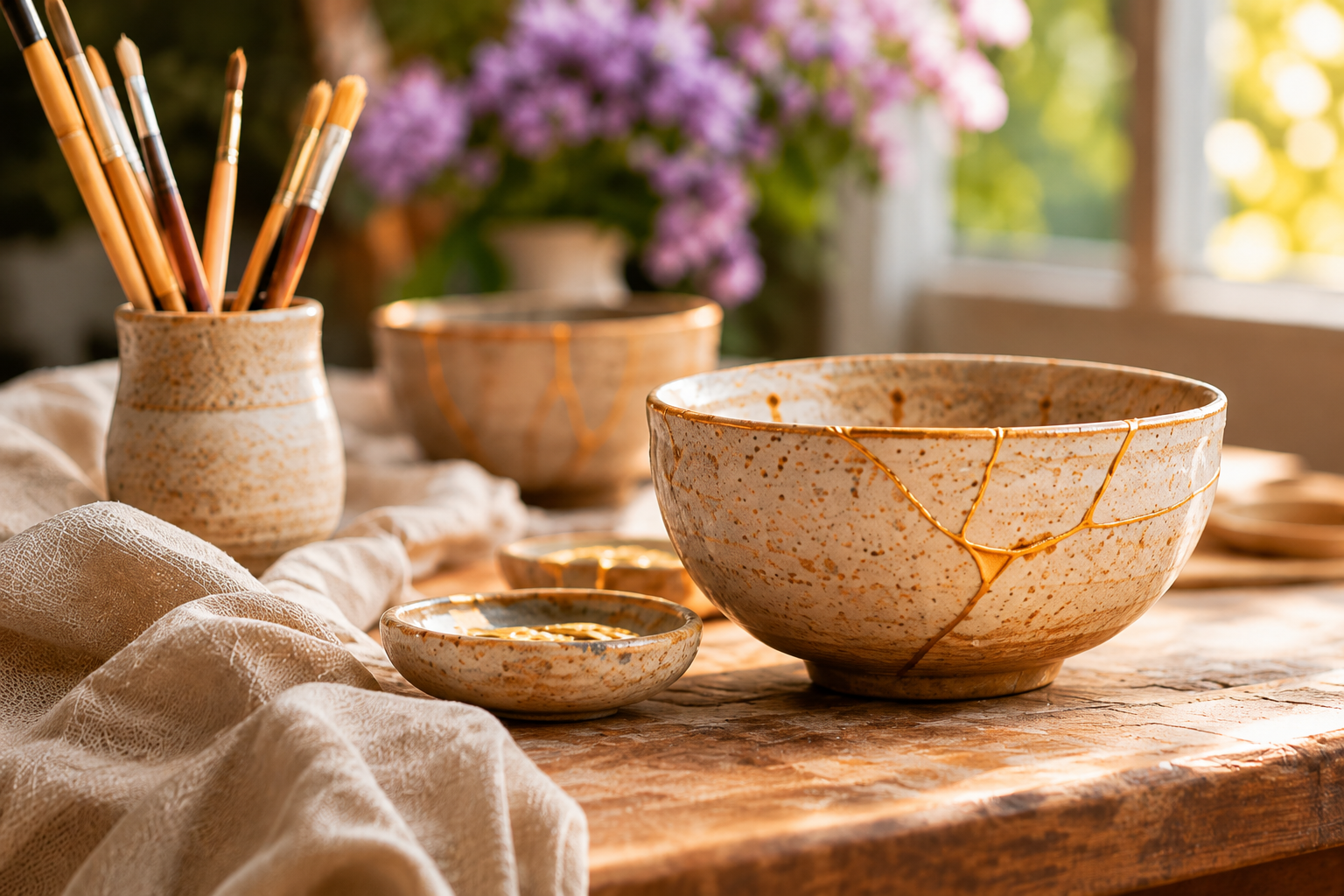
One creative practice that I find particularly beautiful is Kintsugi, the Japanese art of repairing broken pottery with gold. I didn’t know what it was called when I saw kintsugi plates on the wall in a restaurant. I just knew it was beautiful. The symbolism for me was in the uniqueness of each piece- no one would be the same as another.
When I eventually learned more about its meaning, it made so much sense to me why I had been drawn to it in the first place. Rather than hiding the cracks or pretending the break never happened, Kintsugi makes the repair visible. The finished piece carries the story of its breakage and considers the golden joins part of its beauty. There was a depth to the practice that I hadn't initially understood.
When I had the opportunity to experience the process myself, it reminded me of something I am with day and day out in my work- there is a difference between understanding something intellectually and truly knowing it.
We can read about an idea, understand its meaning and even believe it, but experiencing something for ourselves brings an entirely different level of knowing. Practicing kintsugi gave me a connection to the practice that simply reading about it couldn't. And now I want to share it.
If you are interested in learning more about a special kintsugi retreat for women planned for Spring 2027, you can do thathere.
